
There are two core types of warrants, judicial warrants and administrative warrants.
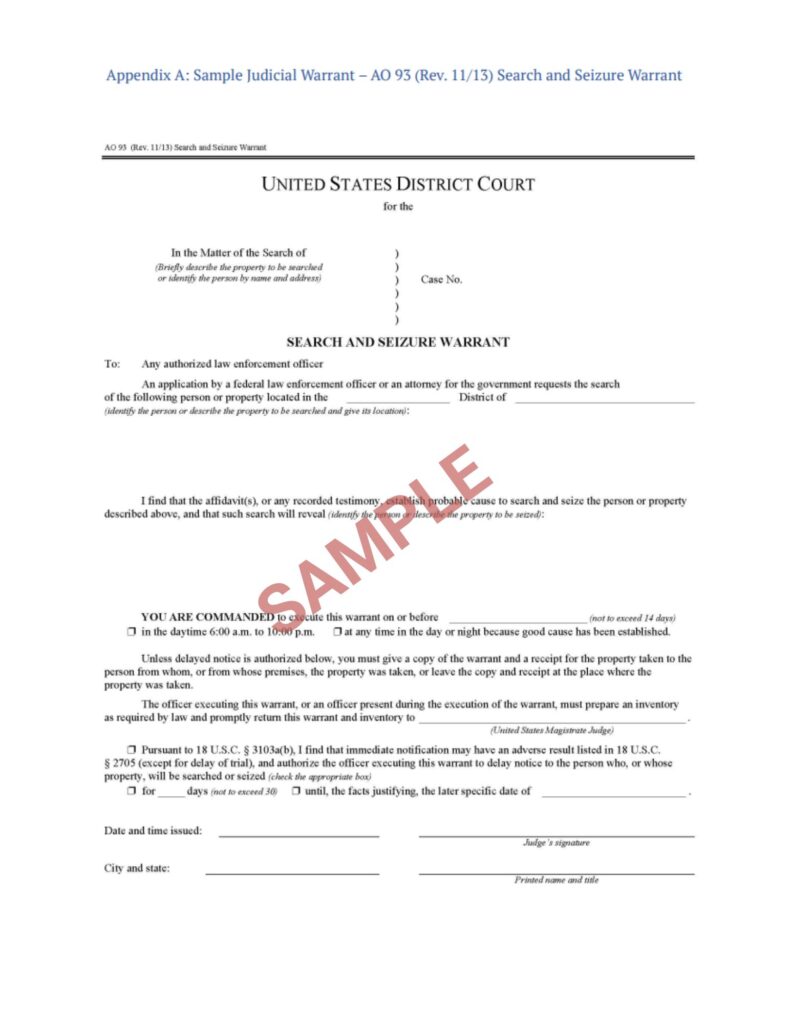
Judicial warrants are signed by a judge and per the 4th Amendment of the Constitution are required to allow Law Enforcement into a home.
Administrative warrants are issued by organizations themselves who handle administrative issues, such as ICE. Administrative warrants are typically used to arrest someone in a public space, as public spaces do not have 4th Amendment protections, like a home does.
It is much more complex than that from a legal perspective, and if you’d like to understand your rights in more detail, please refer to the National Immigration Law Center’s resource on this which can be found here: https://www.nilc.org/wp-content/uploads/2025/01/2025-Subpoenas-Warrants_.pdf
Scroll down to see a sample of a Judicial Warrant and an Administrative Warrant so that you can see the difference.
Key Take Away once you review them both – a judicial warrant will have a case number at the top and a judge’s signature at the bottom, an administrative warrant will not have these elements.
Judicial Warrant
Administrative Warrant
